Kaneohe Sandbar Tours: Is It Worth It? (Full Guide)
An honest, unbiased look at Kaneohe Bay's famous sandbar, what it actually costs, and how it compares to the guided south shore tours we do sell.
The verified sandbar option here is a self-guided kayak rental requiring transport and paddling. It is not a crewed sandbar boat tour.
Independent guide; tours are run by the listed operators. We may earn a commission from bookings. Article price examples are indicative; check current totals and restrictions at booking.
Quick choice: Paddle to the actual Kaneohe Sandbar with a kayak, equipment and route instructions. Explore Kaneohe Self-Guided Sandbar Kayak
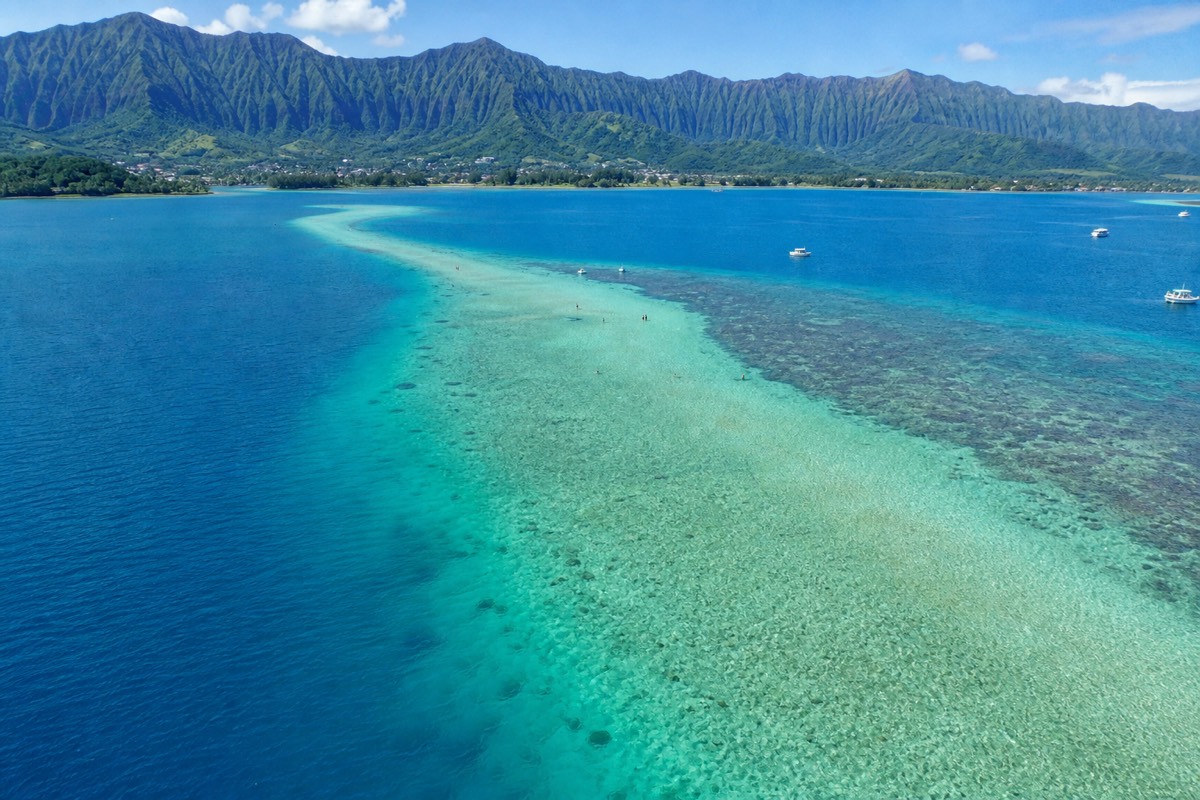
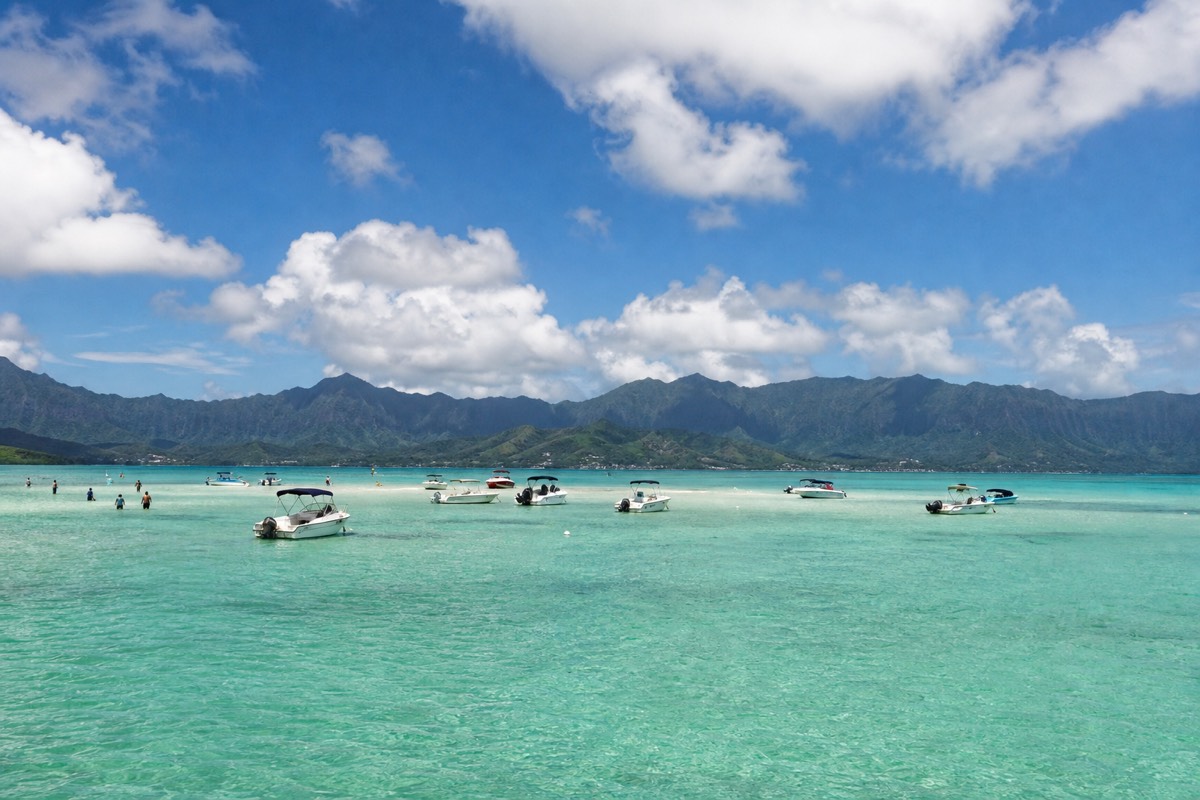
At low tide, a wide strip of pale sand rises out of the middle of Kaneohe Bay on Oahu's windward side, and on a clear afternoon you can count dozens of boats anchored along its edges. Locals and Hawaiian tradition call it Ahu o Laka, "the altar of Laka," the Hawaiian goddess of hula and the forest. Everyone else just calls it the Kaneohe Sandbar. It shows up constantly in trip-planning searches, and for good reason: standing waist-deep in the middle of the ocean, miles from any beach, is a genuinely strange and photogenic thing to do on vacation.
This is an independent booking guide, not a boat operator. The verified sandbar option in this shortlist is self-guided kayaking, with equipment pickup in Kailua and your own transport to the launch. It requires paddling confidence and suitable conditions. A crewed sandbar boat is a different product. Coastal tours leaving Kewalo Basin or Ala Wai Harbor explore a different part of Oahu and do not take you to Kaneohe Sandbar.
Part of why this topic gets searched so heavily is that the sandbar photo travels well online, and the practical questions behind it, how to get there, what it costs, whether it's safe, rarely get answered in one place. Most of what's written about it comes from the handful of operators who sell the trip, which makes sense for them but leaves an honest, independent comparison hard to find. That's the gap this guide is trying to close.
At a glance
Sandbar pricing checked against current Kaneohe-area tour listings (Aug 2026); our own tour prices are live GetYourGuide listing prices.
What Is the Kaneohe Sandbar, Really?
Kaneohe Bay is the largest sheltered body of water in the main Hawaiian Islands, bounded by a barrier reef that keeps the open ocean swell from reaching the inner bay. Ahu o Laka sits roughly in the middle of that reef-protected water, a shifting patch of sand built up by currents and coral sediment over a very long time. It isn't solid ground the way a beach is. It's exposed sand at low tide and submerged sand at high tide, which is the whole reason the "standing in the ocean" photo works: from a distance it looks like people are simply standing on the surface of the sea.
The sand itself moves. Storms, currents, and boat traffic reshape it season to season, so the exact size, shape, and depth of the exposed area on any given day depends on the tide table and recent weather, not a fixed map coordinate. Operators who run trips there daily track this closely. A first-time visitor generally can't predict it from home.
What makes the sandbar different from a typical Oahu beach day is the setting rather than the sand itself. There's no shoreline in the photo, no palm trees at the edge of the frame, just water in every direction and a strip of pale sand underfoot. That's the specific, strange appeal driving so much of the interest: it reads less like a beach trip and more like a brief, surreal stop in the middle of the Pacific.
What Kaneohe Bay Is Known for Beyond the Sandbar
The sandbar gets most of the search traffic, but it sits inside a much bigger, genuinely important body of water. Kaneohe Bay's roughly 20-mile shoreline is ringed with ancient royal fishponds, walled enclosures Native Hawaiians built centuries ago to farm fish without depleting the surrounding reef. At one point an estimated 30 separate fishponds covered close to 30 percent of the bay's shoreline. The best-preserved example, He'eia Fishpond, is around 800 years old and is the only Hawaiian fishpond fully encircled by a stone wall, a design that let juvenile fish in through sluice gates while keeping larger predators out.
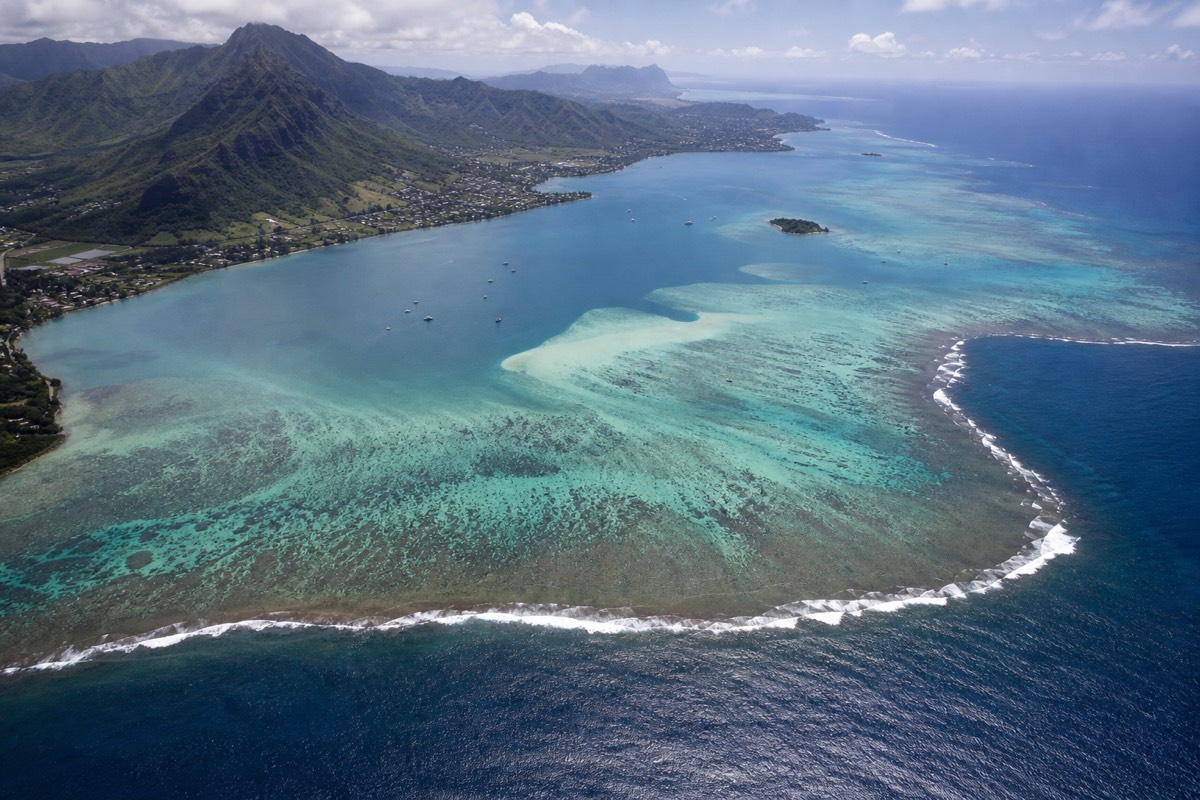
Near the bay's southern end sits Moku o Lo'e, better known as Coconut Island, home to the University of Hawaii's Hawaii Institute of Marine Biology since 1947. The bay's barrier reef, the same one that shelters the sandbar from open-ocean swell, is also considered one of the healthier coral reef systems left in the main Hawaiian Islands, part of why researchers keep studying it. None of this shows up in a typical sandbar-tour listing, but it's the reason the bay looks and functions the way it does.
How the Sandbar Fits Into a Wider Oahu Water Itinerary
A Kaneohe Sandbar trip covers windward Oahu and a specific kind of low-key, photo-driven afternoon. It doesn't cover reef snorkeling, guided wildlife viewing, or the south shore's protected bays, so most visitors pair it with something else during their trip rather than treating it as the whole ocean itinerary.
If wild dolphins are more the draw than a sandbar, our dolphin watching on Oahu guide covers where and how spinner dolphins are actually seen around the island, separate from anything Kaneohe offers. For snorkeling specifically, our boat tours vs. Hanauma Bay guide lays out the honest trade-offs between a boat-based reef trip and Oahu's most famous shore snorkel spot. And if the DIY instinct behind "can I skip the tour and do this myself" is what brought you to this page in the first place, our boat rental vs. guided tour guide walks through what renting your own boat on Oahu actually involves, costs, and requires.
How Much Does a Kaneohe Sandbar Tour Cost?
Because the sandbar isn't a ticketed attraction with one operator, prices vary by company, boat size, and what's bundled in. Shared group tours on a shuttle-style boat tend to run in the low hundreds per person. Private charters cost considerably more but include the whole boat. Watersport add-ons like jet skis or a banana boat ride usually stack on top as extras rather than coming included.
| Tour type | Typical price range | What's usually included |
|---|---|---|
| Shared group boat tour (2 to 4 hours) | Roughly $90 to $190 per person | Boat transport to the sandbar, often a floating mat or basic snorkel gear |
| Add-on watersports | Often another $50 to $100 per person | Jet ski time, a banana boat ride, or paddleboard rental layered onto the base trip |
| Private charter (6 to 12 guests) | Roughly $1,250 to $6,000+ total | Exclusive use of the boat, flexible timing, no sharing the sandbar with strangers |
| Children's rate | Typically 50 to 75 percent of the adult price | Policy varies by operator, always confirm at booking |
Those figures move with the season and the operator's fuel costs, so treat them as a planning range rather than a quote. If a listing looks dramatically cheaper than everything else, ask what's actually included before booking.
A few things push the price up or down beyond the base rate. Group size matters most: a shared tour splits fuel and captain costs across everyone aboard, while a private charter concentrates that same cost onto one party, which is why the per-person math flips so sharply once you go private. Season plays a smaller role than you'd expect, since the sandbar itself doesn't have a "peak" the way whale watching does, though summer weekends tend to book up faster simply because more families are traveling. Hotel pickup, when offered, is usually an add-on rather than something bundled into the base price, so factor that in separately if you're not already near Kaneohe.
Best Conditions and Tide Timing
Because the sandbar's whole appeal depends on how much of it sits above water, tide timing matters more here than at almost any other Oahu boat destination. Operators build their trip windows around the tide table, not the clock, which is why the same company's daily departure time can shift by an hour or more from week to week.
| Tide phase | What you'll actually see | Best for |
|---|---|---|
| Low tide | Sand exposed, sometimes wide and shallow enough to stand comfortably | The classic "standing in the ocean" photos |
| Rising or mid tide | Sandbar narrows, water deepens quickly over the sand | Wading, floating mats, shorter photo windows |
| High tide | Sandbar can disappear underwater almost entirely | Swimming and snorkeling the surrounding shallows, not standing |
Trade winds matter too. Kaneohe Bay sits on the windward side of the island, so afternoons tend to get choppier as the trades build. Morning trips generally see calmer water, the same pattern that tends to favor morning departures for most Oahu boat activities.
Tide tables shift daily, sometimes by close to an hour, so a low tide that lines up perfectly with a Tuesday morning tour won't necessarily repeat the following Tuesday. Reputable operators publish their departure windows around the current month's tide chart rather than running a fixed schedule year-round, which is a reasonable sign that a company actually knows the water rather than just running boats on autopilot.
What to Bring
| Item | Why it matters here |
|---|---|
| Reef-safe sunscreen | The shallow, reflective water off white sand intensifies sun exposure |
| Water shoes or sturdy sandals | Coral rubble and broken shell are common on and around the sandbar |
| A dry bag | Boats anchor offshore, so getting wet in and out of the water is part of the day |
| A light rain layer | The windward side sees more rain and wind than Oahu's south shore |
| Cash | Some independent operators are cash-preferred or add a card surcharge |
Is It Safe to Swim in Kaneohe Bay? Are There Sharks?
This question comes up constantly, and the honest answer is calmer than the search volume around it suggests. Hawaii averages somewhere between three and eight documented shark bites statewide in a typical year, and most of those are not fatal. Hawaii's own Department of Land and Natural Resources puts the odds of any individual being bitten in the state's waters at under one in a million per ocean visit. University of Hawaii researchers have confirmed a real, measurable uptick in tiger shark bites in October, nicknamed "Sharktober" in local coverage, but even that seasonal bump lands on a baseline that's already extremely small.
Set next to Hawaii's actual leading ocean hazard, the picture gets clearer. The state's Department of Health tracks close to 80 ocean drowning deaths a year statewide, mostly tied to currents, shore break, and inexperience in unfamiliar water, not sharks. Kaneohe Bay's reef-sheltered, shallow water is calmer than most open-coast swimming spots for exactly that reason, part of why it draws families and casual swimmers rather than experienced ocean-goers only.
| Risk factor | Approximate scale in Hawaii | Context |
|---|---|---|
| Shark bites statewide, average year | About 3 to 8 incidents | Most are not fatal; researchers link many to low visibility or fishing activity nearby |
| Drowning statewide, average year | Roughly 60 deaths | The real leading cause of ocean fatalities in the islands, not shark encounters |
| Odds of a shark bite per ocean visit | Estimated under 1 in 1,000,000 | A statewide estimate, not specific to Kaneohe Bay's sheltered water |
| October seasonal pattern | Documented small increase in tiger shark bites | Confirmed by University of Hawaii research; still a low absolute number |
None of this means the ocean carries zero risk. It means the shark fear driving so much of the search traffic around this topic is out of proportion to what actually happens in the water. Sharks make for dramatic headlines and a small number of viral videos, which distorts how common encounters feel compared to how rare they actually are. Currents, unfamiliar reef, and simply overestimating your own swimming ability in open water cause far more real problems for visitors than sharks do, in Kaneohe Bay or anywhere else in Hawaii.
Can You Get to Kaneohe Sandbar Without a Boat Tour?
Technically, yes, though "without a tour" doesn't mean "without a boat." The sandbar sits well out from shore in the middle of the bay, far past any point you could walk or wade to from land.
| Method | Realistic? | Notes |
|---|---|---|
| Guided boat tour | Yes, the most common route | No boating experience needed, the operator handles navigation and timing |
| Personal or rented boat | Yes, for licensed or briefed operators | Requires knowing the bay's reef channels; running aground is a real risk for the unfamiliar |
| Kayak or stand-up paddleboard | Only for strong, experienced paddlers | A long open-water crossing with real boat traffic to navigate around |
| Swimming from shore | Not realistic for most visitors | The sandbar sits too far from any public shore access point |
In practice, almost everyone who visits the sandbar gets there on somebody's boat, whether that's a paid tour, a private rental, or a friend's boat. Independent operators based in Kaneohe run this route daily and know the tide table and channels the way local coastal captains know the reef off Kewalo Basin.
Kaneohe Sandbar vs. Our Guided South Shore Tours
The honest comparison isn't "which is better." It's "which trip is actually the one you want." The sandbar is a destination: a strange, beautiful patch of sand in the middle of the ocean, and not much more than that. Our tours are structured wildlife and reef experiences on a different part of the island entirely.
| Factor | Kaneohe Sandbar (independent operators) | Our Kewalo Basin / Ala Wai tours |
|---|---|---|
| Location | Kaneohe Bay, windward side | Kewalo Basin and Ala Wai Harbor, south shore |
| Typical price | Roughly $90 to $190 per person | $43 to $59 per person |
| Structure | Independent local operators, format varies by company | Fixed-format tours booked through GetYourGuide, with listed pricing and policies |
| Main draw | Standing on an exposed sandbar mid-ocean, casual swimming | Seasonal humpback whales, reef snorkeling, sea turtles and shipwreck viewing |
| Cancellation policy | Varies by operator, ask before booking | Free cancellation window shown at booking |
| Best for | A photo-worthy, low-key beach-in-the-ocean afternoon | A guided wildlife or reef tour with narration from the crew |
Who Should Book Which
If what you actually want is the sandbar itself, the strange sight of a beach with no land attached, book it through a Kaneohe-based operator and plan around the tide table above. That's a real, worthwhile experience, and we're not going to pretend otherwise just because we don't sell it.
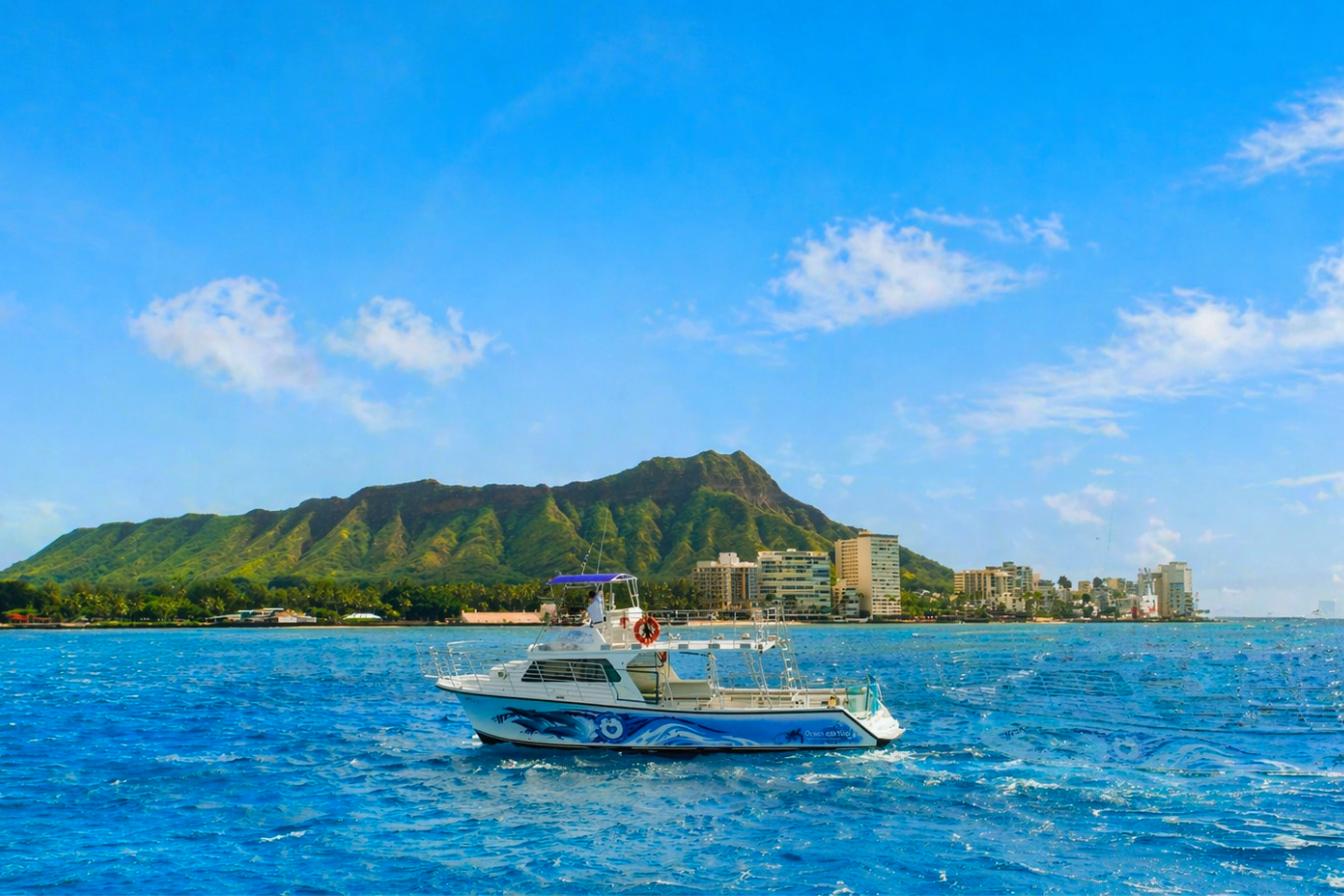
If what you're really after is a guided boat day with a knowledgeable crew, structured wildlife viewing, and a straightforward booking process, coastal tours offer that on the south shore, including honest odds on seeing a green sea turtle at Turtle Canyon. Our whale watching tour runs a 2-hour trip from Kewalo Basin Harbor during the season when humpback whales are in Hawaiian waters, with crew narration; a hydrophone and reduced capacity are not confirmed for the current replacement listing. Our snorkeling tour covers reef life, turtles, and an actual water playground with a slide, and our glass-bottom boat tour is a dry option if getting wet is not the goal. None of them put you on a sandbar. All of them put you on the water with people who do this every day. You can browse the rest of our Oahu boat tours if none of those three fit what you're picturing.
There's also a practical reason to think about this beyond preference. Combining a sandbar trip with a south shore tour on the same visit usually means two separate mornings or afternoons, since the drive between Kaneohe and Waikiki takes real time and neither operator is going to coordinate a same-day double booking for you. If your trip is short, picking one over the other, rather than trying to squeeze in both, tends to make for a more relaxed vacation. If you have the time for both, there's no conflict in booking a Kaneohe operator for the sandbar and a south shore trip with us for everything else Oahu's water has to offer.