Dolphin Watching on Oahu: What to Actually Expect
Spinner dolphins spend their days resting in a handful of shallow Oahu bays after hunting all night offshore, and a federal rule now requires boats and swimmers to stay fifty yards back while they do it.
A dedicated west-coast dolphin watch has a different focus from an incidental sighting on a Waikiki reef trip.
Independent guide; tours are run by the listed operators. We may earn a commission from bookings. Article price examples are indicative; check current totals and restrictions at booking.
Quick choice: A dedicated west-coast dolphin search followed by reef snorkeling, with gear and crew. Explore West Oahu Dolphin Watch And Snorkel
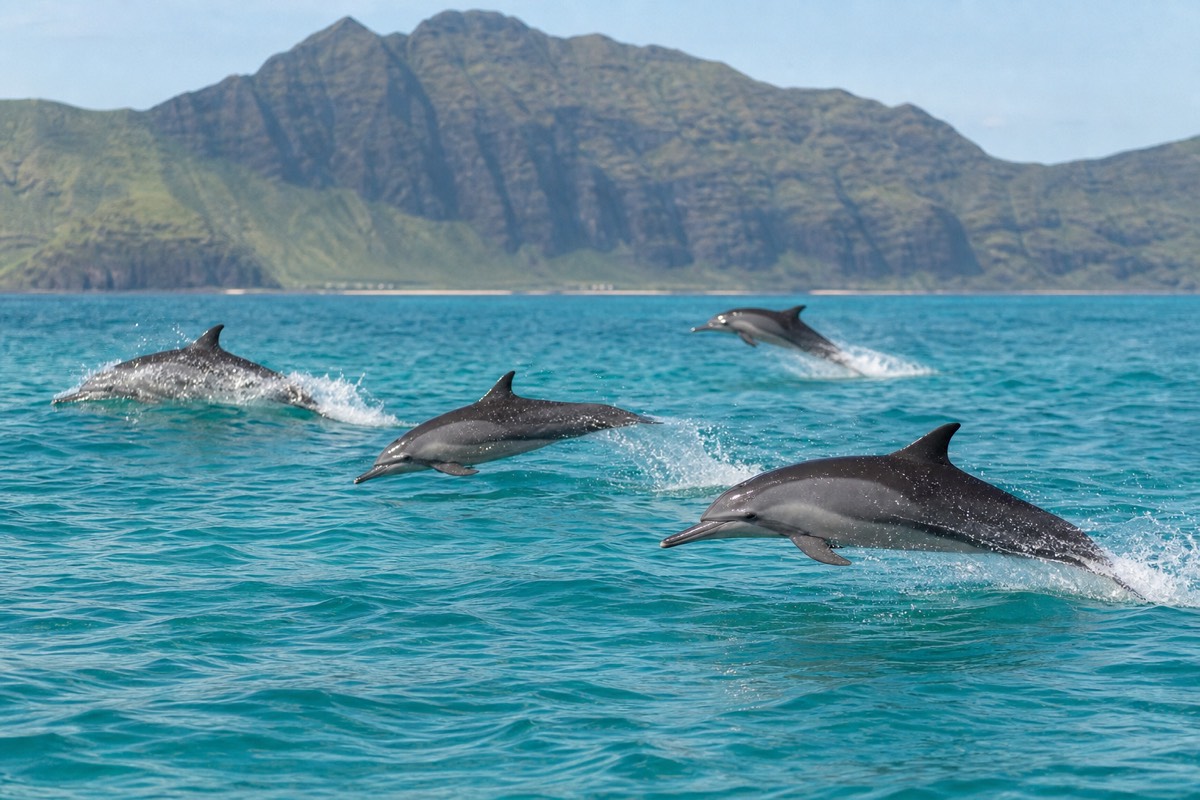
A pod of spinner dolphins does not perform. By the time most boats reach them in the morning, they are already moving in slow, tight circles just offshore, barely breaking the surface, doing the marine equivalent of sleeping in after a long night at work. That is close to the opposite of what a lot of people picture when they book a "dolphin tour" in Hawaii, and it is also the reason federal regulators wrote a rule in 2021 specifically to keep people away from resting dolphins during the day. This guide covers where Oahu's dolphins actually are, when the odds of seeing them are genuinely good, and why a boat that watches from a distance is a different, and better, choice than a tour built around getting in the water with them.
Most of the confusion around dolphin watching in Hawaii comes from treating it like any other wildlife excursion: show up, look, done. Spinner dolphins run on their own clock, tied to a genuine daily migration between offshore hunting grounds and nearshore rest sites, and understanding that clock is most of what separates a planned trip with a real chance of success from one built on guesswork.
At a glance
Based on NOAA Fisheries' 2021 spinner dolphin regulation and species data, fisheries.noaa.gov, checked 2026.
Which Dolphins You'll Actually See on Oahu
The dolphin most commonly encountered around Oahu is the Hawaiian spinner dolphin, a small, fast species named for the spinning leaps it performs at the surface, often rotating several times on its long axis before splashing back down. Spinner dolphins live in Hawaiian waters year-round, unlike the humpback whales that only show up for the winter breeding season, and NOAA's own population work puts the Oahu and neighboring-islands spinner dolphin stock at roughly 300 animals, a small, resident population rather than a passing migratory one. That is a modest number spread across a lot of coastline, which is one honest reason sightings cluster so heavily around a handful of specific bays rather than turning up evenly along the shore.
Bottlenose dolphins turn up in Oahu's waters as well, sometimes alongside spinner pods and sometimes on their own, and the site's own tour descriptions note both species riding the bow wave on occasion. The two are easy enough to tell apart once you know what to look for: spinner dolphins are smaller, leaner, and noticeably more acrobatic at the surface, while bottlenose dolphins are bulkier, calmer in their movement, and less prone to leaping. Spinners are the species most strongly associated with Oahu's leeward coast and its daytime resting pattern; bottlenose dolphins range more broadly and don't follow the same predictable bay-by-bay schedule.
Where Sightings Cluster: Leeward Bays vs. the South Shore
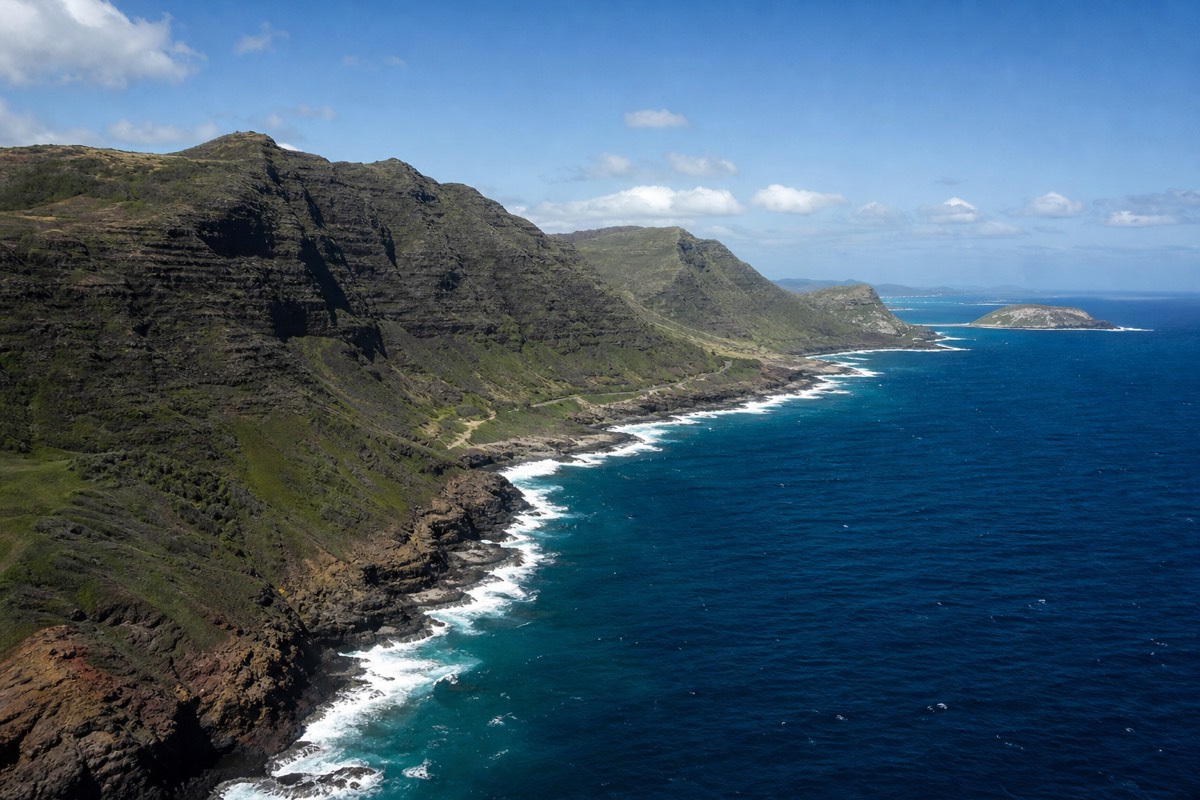
Geography matters more than luck here. Oahu's leeward, or Waianae, coast has a string of calm, sandy-bottomed bays, Makaha Beach and Makua Beach among them, where resident spinner dolphin pods return every morning to rest. Dedicated dolphin-watching boats on that coast typically launch from Waianae Boat Harbor at Poka'i Bay or from Ko Olina Marina further south, and operators there commonly report sighting success above 90 percent on morning trips, since the pods are creatures of habit and use the same bays day after day.
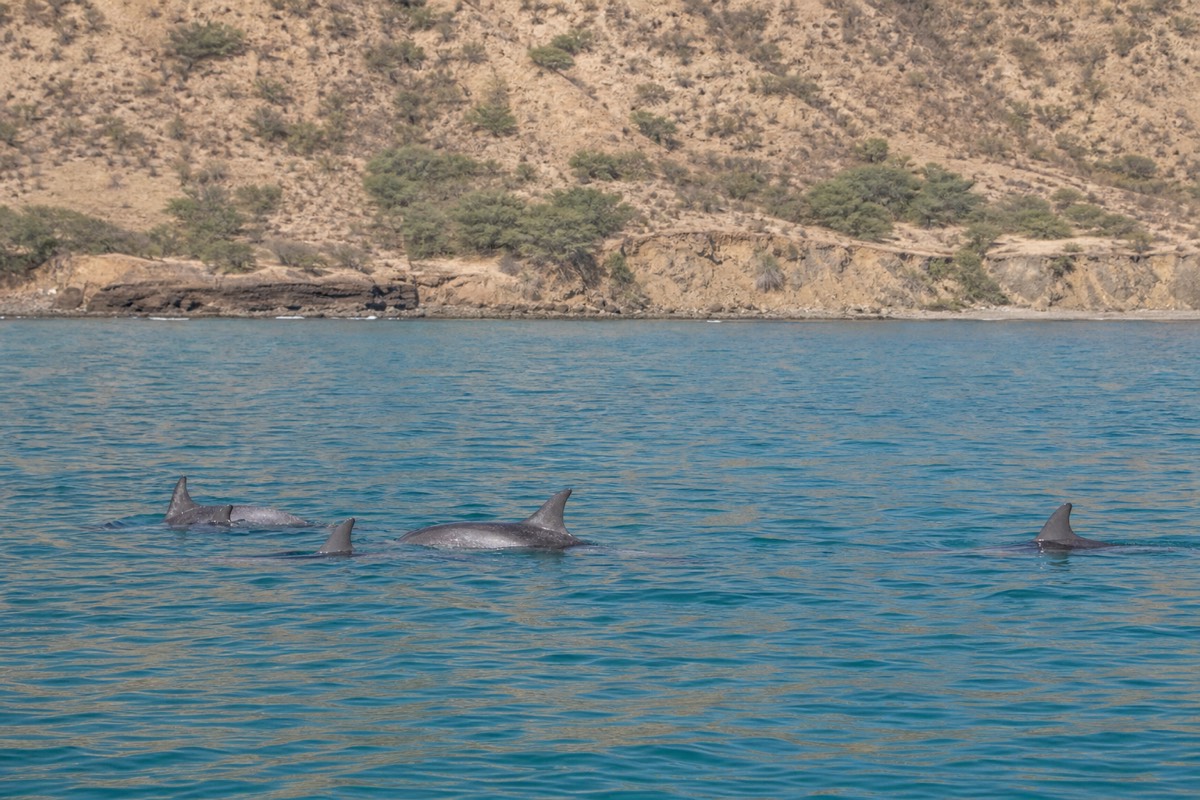
What makes the leeward bays work as resting habitat is a specific combination of features: calm water shielded from the trade winds and swell that hit the windward side of the island, a sandy bottom rather than sharp reef, and enough depth to feel secure from shore-based predators while still shallow enough to see approaching danger from a distance. Researchers studying the behavior have noted that resting dolphins largely stop echolocating during this period, relying on sight instead, which is part of why the specific water clarity and bottom type of these bays matters so much to the animals that keep returning to them.
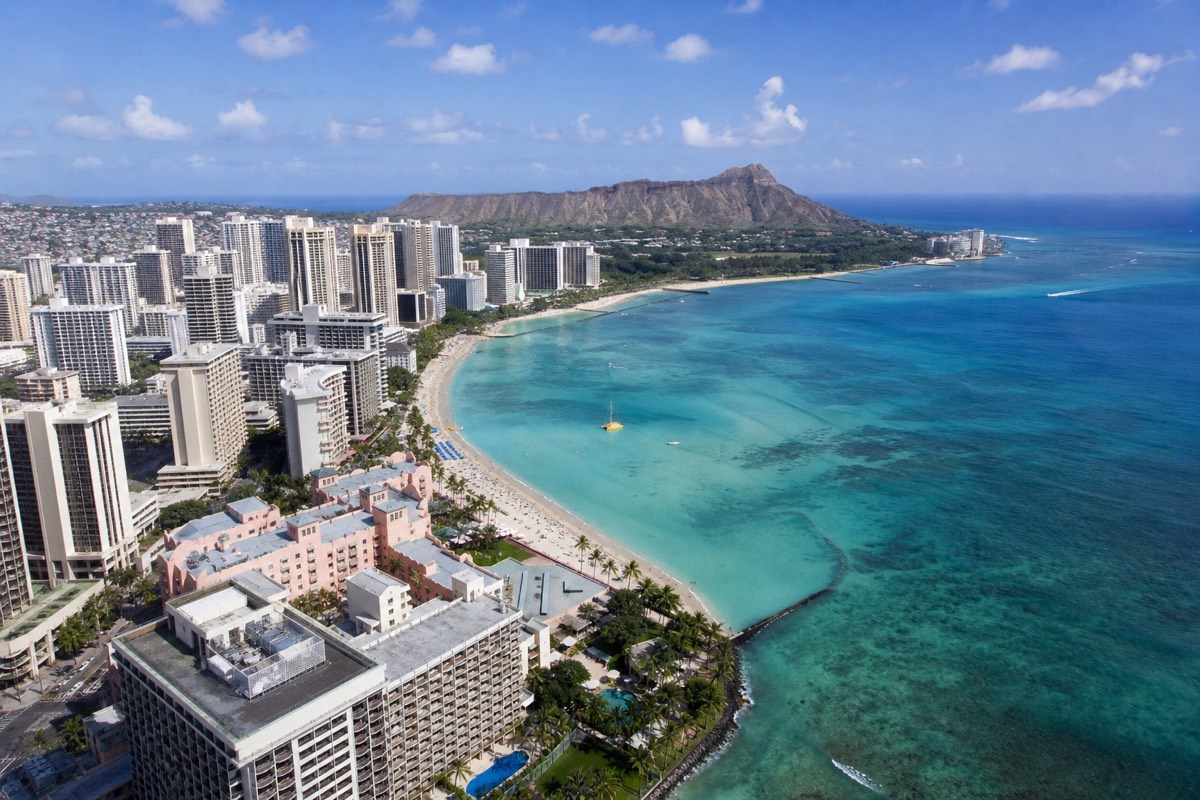
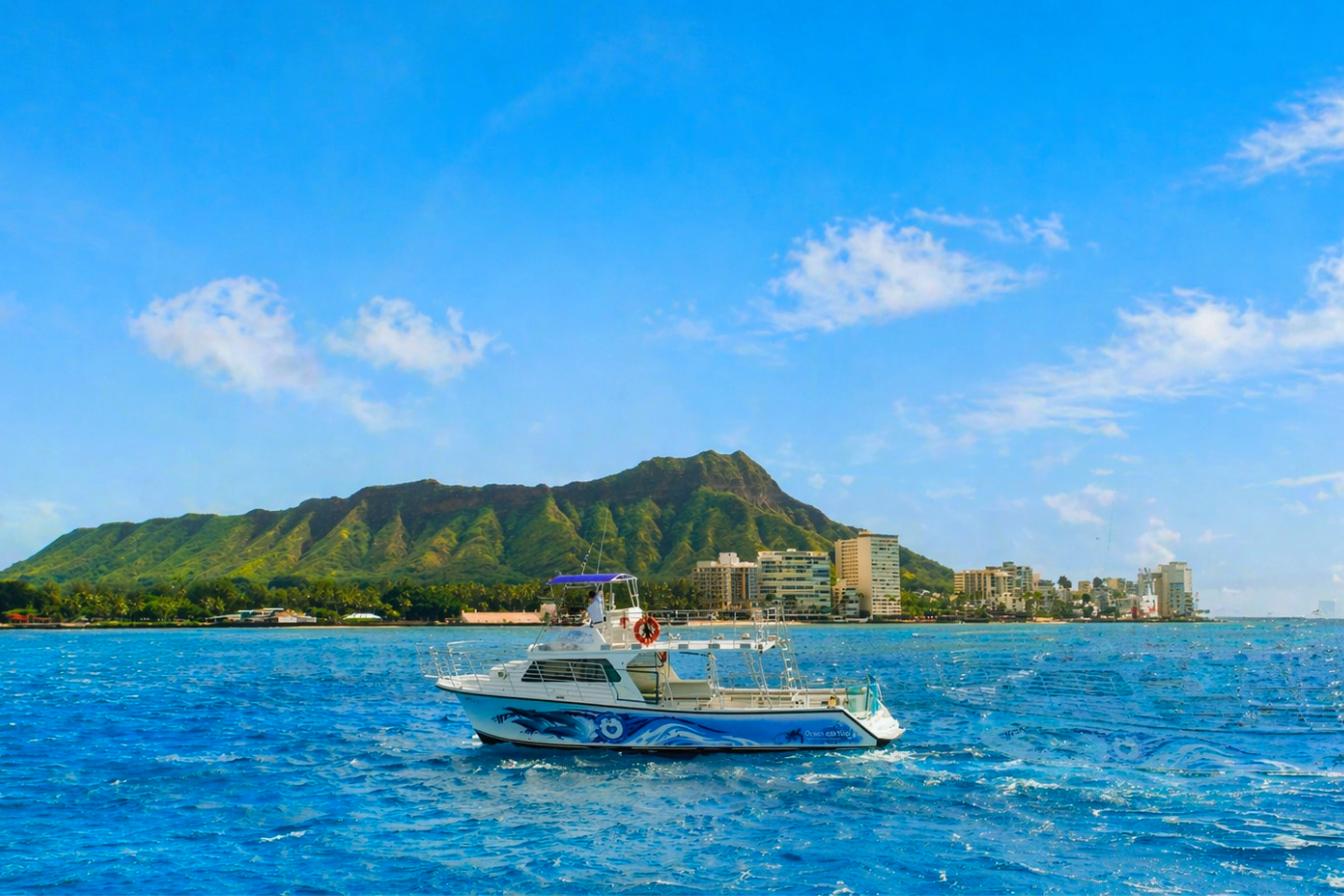
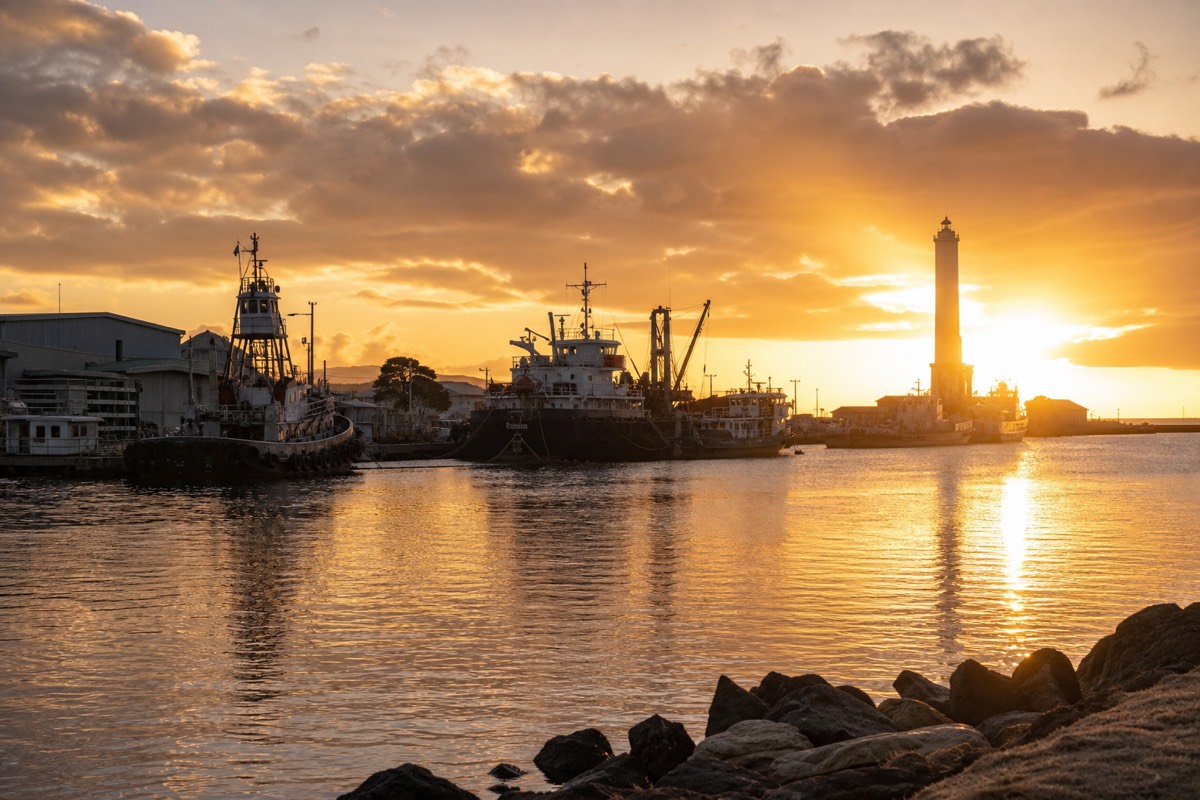
None of the six tours on this site launch from the leeward coast, and none launch from windward Kaneohe Bay either, home to the Kaneohe Sandbar and a different kind of boat day entirely. All six work Oahu's South Shore, out of Kewalo Basin Harbor or Ala Wai Harbor, closer to Waikiki. Dolphins are seen from these boats too, spinners and occasionally bottlenose, but as an opportunistic sighting along a cruising route rather than the destination itself. The site's own sunset splash cruise tells guests directly to keep an eye out for dolphins in the "dolphin-rich waters" it passes through, and recent guests have reported sightings making the trip better, but it is an honest bonus, not the tour's built-in purpose the way it is on a dedicated leeward dolphin excursion.
The distance between the two coasts matters practically as well as biologically. Waianae sits roughly 45 minutes to an hour from Waikiki by car, on the opposite side of the island from the South Shore harbors this site's tours use. A visitor whose main goal is a dedicated leeward dolphin trip is looking at a different geography, a different drive, and a different operator entirely, not a variation on the Kewalo Basin or Ala Wai departures. That's a reasonable trip to plan on its own terms; it just isn't one of the six sold here, and being upfront about that distinction is more useful than blurring it.
| Location | Why dolphins gather there | How this site's tours relate |
|---|---|---|
| Waianae coast (Makaha, Makua bays) | Calm, shallow, sandy-bottomed bays used daily as resting habitat | Not covered; these are dedicated leeward dolphin tours, a different product |
| South Shore (Kewalo Basin, Ala Wai) | Dolphins pass through and occasionally bow-ride along cruising routes | Covered by the whale watch, snorkeling, and sunset splash tours, as a possible bonus sighting |
| Open channel between Oahu and Lāna'i | Regularly used transit corridor for spinner pods | Not on any of the six routes |
The Spinner Dolphin's Day: Why Mornings Matter
Spinner dolphins run on a schedule that is close to inverted from a human one. They hunt offshore at night, diving for squid and small fish in deeper water, then return to sheltered nearshore bays at dawn to rest, socialize, and care for their young for roughly four to five hours before heading back out. NOAA researchers describe resting dolphins moving slowly back and forth in tight formation, spaced just out of contact with one another, largely silent since they stop echolocating while resting. That is precisely why an 8 to 9 AM departure has a real, measurable edge over an afternoon one: it lines up with the window when dolphins are reliably in shallow water rather than scattered offshore.
| Time of day | What spinner dolphins are doing | Where |
|---|---|---|
| Night | Actively hunting squid and small fish | Deeper offshore water |
| Dawn | Returning to shore in pods | Transiting into shallow bays |
| Day, roughly 4 to 5 hours | Resting, socializing, caring for calves | Calm, shallow, sandy-bottomed bays |
| Late afternoon | Increasing activity, heading back out | Departing toward deeper water |
The Real NOAA Rule: Fifty Yards, No Swimming With Wild Dolphins
In 2021, NOAA Fisheries finalized a regulation specifically to protect Hawaiian spinner dolphins from disturbance during their daytime rest. The rule prohibits swimming with, approaching, or remaining within 50 yards of a Hawaiian spinner dolphin, and it applies to vessels, swimmers, paddleboards, and drones within 2 nautical miles of shore across the main Hawaiian Islands, Oahu included.
The reasoning behind the rule is straightforward biology. When a resting dolphin is disturbed, it has to expend energy swimming away or changing direction, energy it needs later for hunting and nursing calves. NOAA's own findings noted that some Hawaii resting bays had seen as many as 13 tour boats at once and more than 60 swimmers in the water trying to get close, pressure that pushes dolphins to avoid otherwise good habitat or leaves them with less energy for their overnight feeding. Chronic disturbance, in NOAA's language, can put resident populations at risk through habitat displacement or reduced health, and researchers have specifically linked repeated disruption of the daytime rest period to poor body condition, which in turn reduces a dolphin's ability to fight off disease.
The rule didn't appear out of nowhere. Hawaii's swim-with-dolphins tourism grew for years around exactly the behavior the regulation now restricts, boats and swimmers converging on the same reliable resting bays because that predictability made for an easy, marketable excursion. The tension between that business model and the biology of a resting marine mammal built for over a decade before NOAA finalized a rule specific to spinner dolphins rather than relying on general marine mammal harassment guidelines alone. Understanding that history is part of understanding why a boat that keeps its distance today isn't being overly cautious, it's operating the way the regulation intends every operator to.
| Rule element | Detail |
|---|---|
| Minimum distance | 50 yards from any Hawaiian spinner dolphin |
| Where it applies | Within 2 nautical miles of shore, main Hawaiian Islands |
| Who it covers | Vessels, swimmers, paddleboards, drones, and other objects |
| What's prohibited | Swimming with, approaching, or remaining within the distance |
| Why it exists | Protects the roughly 4 to 5 hour daytime rest period dolphins depend on for energy and calf care |
Boat Tour vs. Swim-With-Dolphins Tour: Two Different Products
It is worth being direct about this distinction, because the marketing around Oahu dolphin trips often blurs it. A boat tour that watches dolphins from the deck, at a respectful distance, while cruising or anchored, is one product. A tour that puts swimmers in the water specifically to approach and interact with a wild pod is a different one entirely, and depending on the distance involved, it can run directly against NOAA's 2021 rule. None of the six tours sold on this site are swim-with-dolphins trips. They are boat-based wildlife viewing: the whale watch and the sunset splash cruise both mention dolphins as a possible sighting from the deck, not an activity guests enter the water to pursue. Anyone weighing whether to rent their own boat and go looking for dolphins independently should read our boat rental versus guided tour comparison first: a licensed captain who already knows where the pods rest is a real practical advantage over navigating unfamiliar water solo.
The practical difference shows up in how a captain actually handles a sighting. On a boat-watching trip, the standard approach is to slow down, hold position, and let the animals decide whether to come closer, which is exactly how the site's own tours describe their protocol: maintaining a respectful distance and letting dolphins choose whether to interact with the boat, explained to guests before any sighting rather than improvised in the moment. A swim-with-dolphins operation, by contrast, is built around closing that distance so swimmers can get in the water near the pod, which is the specific behavior the 50-yard rule now restricts within 2 nautical miles of shore. Neither approach guarantees an encounter, wild animals don't take direction from either kind of boat, but the two set out with fundamentally different goals.
| Boat tour (watch from the deck) | Swim-with-dolphins tour | |
|---|---|---|
| What you do | Observe from the boat, at a distance | Enter the water to approach a wild pod |
| Distance to dolphins | 50 yards or more, dolphins choose whether to approach | Often intended to be much closer |
| Legal status under the 2021 NOAA rule | Compliant by design | Can conflict with the rule depending on how it's run |
| Sold on this site | Yes, on 3 of the 6 tours | No |
| Effect on resting dolphins | Minimal if distance is kept | Can interrupt essential daytime rest |
Which of Our Tours Realistically Spot Dolphins
Setting expectations honestly matters more than promising a sighting. Here is how the three relevant tours actually describe their own dolphin chances, in their own words.
| Tour | Dolphin chances | What the tour is actually built around |
|---|---|---|
| Sunset Splash Cruise | Explicitly mentioned; crew tells guests to watch for them | An evening sunset sail with an optional 1-hour swim stop |
| Whale Watching Boat Adventure | Possible along the route, secondary to the whale search | A December-through-April humpback whale tour |
| Snorkeling Adventure (Ocean Playground) | Described as a possibility in the tour's own listing | A reef snorkel stop plus a waterslide and jump platform |
None of the three are marketed as dedicated dolphin tours, and none should be booked purely for the dolphin chance. Anyone whose main goal is spinner dolphins specifically should understand that the more reliable sightings happen off the leeward coast, on tours this site does not sell, and adjust expectations for a South Shore trip accordingly.
What a Good Dolphin Sighting From a Boat Actually Looks Like
Even at a respectful distance, a real sighting is distinctive enough not to be missed. Bow-riding is the behavior most guests describe as the highlight: dolphins swimming directly in the pressure wave a boat's hull pushes ahead of it, sometimes in groups of ten or more, matching the boat's speed for stretches at a time entirely on their own initiative. A resting pod, by contrast, looks much quieter from the water's surface, small groups moving slowly and staying tightly grouped, easy to miss if you're not watching closely. Crews on this site's tours scan the water actively rather than waiting for guests to spot something first, which is part of why the boats' own materials describe changing course when dolphins are noticed, rather than sticking rigidly to a fixed route regardless of what's around.
Dolphins Are Not Guaranteed: Reading "High Probability" Honestly
Operators on the leeward coast frequently cite sighting rates in the 80 to 95 percent range on a given morning, and that figure is real for boats specifically working the resting bays. It does not transfer directly to a South Shore tour that is built around something else, whale watching, snorkeling, or a sunset sail, and only mentions dolphins as a bonus. Wildlife does not follow a schedule regardless of which coast a boat works. A calm, clear morning departure improves the odds everywhere; nothing improves them to a guarantee.
It helps to separate the two claims a booking page might make. "Dolphins are commonly seen on this route" is an honest, defensible statement grounded in the tour's own history. "You will see dolphins" is a promise no responsible operator should make about a wild animal that isn't confined or trained. The tours on this site lean toward the first framing rather than the second, and that distinction is worth watching for on any Hawaii boat tour listing, not just this one.
Dolphins Year-Round, Whales Only in Winter
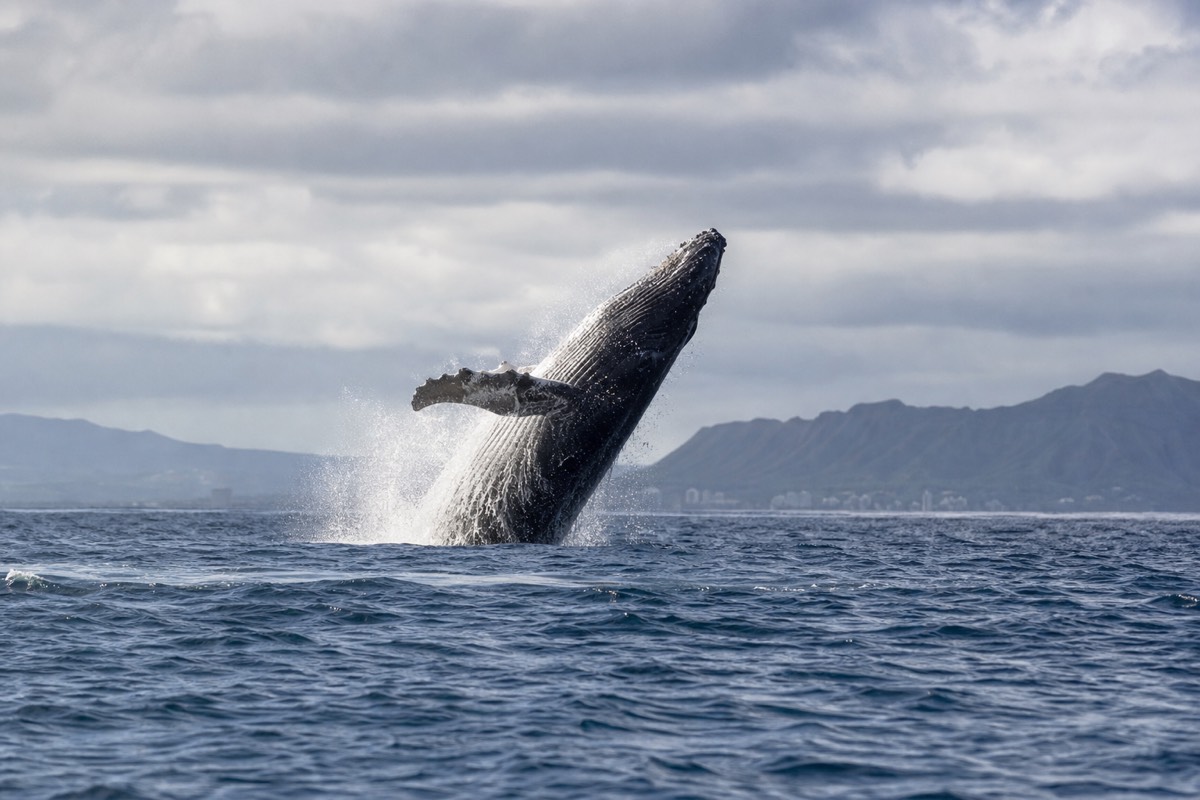
One useful way to think about the two: spinner dolphins are Oahu residents, present in the same waters every month of the year, while North Pacific humpback whales are winter visitors, present roughly mid-December through April with sightings peaking in January through March. A trip booked outside whale season loses nothing on the dolphin front, since that part of the ocean's activity does not have an off-season. For the structured, month-by-month case on when the whales specifically are worth chasing, see Best Time to Go Whale Watching on Oahu, or, for visitors deciding between the two islands entirely, Oahu or Maui for Whale Watching?
There's a practical upside to this overlap for anyone planning a winter trip. Booking the whale watching tour between December and April doesn't mean giving up on dolphins for that outing. The route runs through the same general South Shore waters where dolphins are occasionally spotted year-round, so a winter booking carries both a real chance at whales, the tour's actual purpose, and the same background possibility of a dolphin sighting that any South Shore boat carries. Visitors traveling in the summer months, when whales are entirely absent from Hawaiian waters, lose nothing dolphin-related by comparison; the animals most associated with "summer Hawaii wildlife" in a lot of trip-planning content are, if anything, present just as reliably in December as they are in July.
| Spinner dolphins | Humpback whales | |
|---|---|---|
| Season | Year-round | Roughly mid-December through April |
| Peak activity | Morning, 7 to 11 AM | January through March |
| Where on Oahu | Leeward coast bays; occasional South Shore sightings | South Shore waters, within legal viewing distance offshore |
| Tour on this site | Bonus sighting on 3 of 6 tours | Dedicated whale watching tour |
Sea Turtles and Other Marine Life Along the Way
Dolphin trips on Oahu rarely turn up dolphins alone. Green sea turtles, or honu, are a near-constant presence on the South Shore reefs the tour boats already pass over, and Hawaii's Division of Land and Natural Resources lists them as a protected species, meaning the same distance-and-disturbance principle that governs dolphins applies to turtles as well: observe, do not chase, and never touch. Reef fish, the occasional reef shark, and spotted eagle rays round out what guests typically see on the same trip that produces a dolphin sighting, and our honest look at Turtle Canyon covers the south shore's best-known turtle site if honu are the bigger draw for you. On the snorkeling and splash cruise tours in particular, a turtle encounter is often the more consistent wildlife highlight of the day even when dolphins don't show.
Photographing Dolphins Without Getting Too Close
A telephoto lens or a phone's zoom function does more for a dolphin photo than proximity does, and it keeps the shot legal under the 50-yard rule at the same time. Dolphins that choose to bow-ride, swimming in the pressure wave a boat's hull creates, will often come close enough on their own initiative for a usable photo without the boat or a swimmer closing the gap. Shooting from a stable position on deck, bracing against the boat's motion, and taking several frames in a burst tends to produce better results than a single well-timed shot, since spinner dolphins move fast and unpredictably at the surface. A drone is the one piece of gear to leave at the hotel entirely: the 2021 rule treats drones the same as any other object subject to the 50-yard, 2-nautical-mile restriction, and a drone hovering over a resting pod is exactly the kind of disturbance the regulation was written to stop.
Do's and Don'ts for Dolphin Watching on Oahu
| Do | Don't |
|---|---|
| Book a morning departure, ideally before 10 AM | Expect afternoon conditions to match morning odds |
| Let dolphins choose whether to bow-ride or approach the boat | Chase a pod or cut across its path |
| Keep at least 50 yards of distance, by rule | Enter the water to swim toward wild dolphins |
| Bring a camera with some zoom for a respectful-distance shot | Use a drone near dolphins within 2 nautical miles of shore |
| Treat a sighting as a genuine bonus on a South Shore tour | Book a South Shore tour purely on the promise of dolphins |
Straight answers to what people actually ask before booking.